Perspectives on AI, risk analytics, automation, and turning raw data into decisions that matter.
Over the past few years, dashboards have become ubiquitous. Thanks to the “democratization of data visualization tools,” everyone is suddenly an analyst. With drag-and-drop interfaces and endless templates, it’s never been easier to pull data into a dashboard and share it with colleagues or executives. The problem? Most dashboards are bad. They don’t follow dashboard design best practices. You’ve probably seen them shared on LinkedIn: messy color schemes, overcrowded with charts, crammed into tiny panels, or spread across dozens of pages. They look neat, but they don’t communicate. At best, they confuse. At worst, they actively mislead.
In this weeks article we discuss how distributed ledgers reshape settlement data, risk metrics, and privacy controls in financial markets. The rise of programmable finance on DLT is reshaping how financial institutions think about settlement, data governance, privacy, and risk. Unlike earlier blockchain hype, today’s experiments focus on the data foundations of trust: ensuring interoperability across rails, clear definitions of finality, and privacy-preserving analytics at scale.
For decades, data visualization was the guarded domain of BI specialists, statisticians, and data analysts. If an executive wanted a dashboard or a policymaker needed an analysis, they had to request it through a central analytics team and wait days or weeks for results. That world is gone. Today, thanks to platforms like Tableau, Power BI, and open-source frameworks such as Plotly Dash and Plotly Studio, almost anyone can spin up an interactive dashboard. This shift, known as the democratization of data visualization, promises faster insights, broader participation, and fewer bottlenecks from overworked data teams or gaps in expertise.
Recently Data Sense published an article discussing how synthetic financial data is reshaping risk management in financial services. We detailed how financial regulators have begun to experiment and publish guidelines for implementing and assessing synthetic data for analytical fidelity and privacy preservation. But how can this actually be achieved? Extending our previous research, we have provided a framework below for economists, supervisors and financial data scientists to implement and assess synthetic data use cases. The objective of this tutorial is to help economists, supervisors, and financial data scientists gain practical experience in generating, validating, and assessing synthetic financial data using a real-world dataset, culminating in a realistic one-page briefing note.
As synthetic data in financial services gains momentum, evidence from the Financial Conduct Authority (FCA), the European Commission (EC), and central-bank forums shows it can help close cross-border visibility gaps in risk monitoring and systemic oversight When Lehman Brothers collapsed in September 2008, supervisors around the world struggled to see how risks were propagating through interconnected balance […]
The financial services sector is experiencing a data automation revolution, with 82% of CFOs increasing investments in digital technology in 2024, yet 49% of finance departments still operate with zero automation, relying on manual data entry and Excel spreadsheets (Solvexia, 2025). For data professionals, demonstrating financial data automation ROI has become critical as organizations seek […]
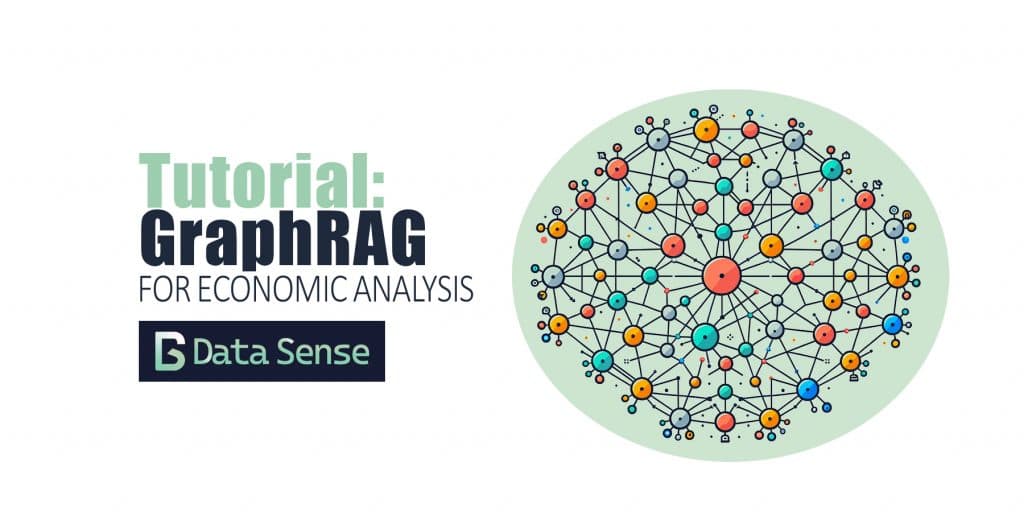
This tutorial details how to create a GraphRAG (Graph-based Retrieval Augmented Generation) to conduct economic data analysis. It will focus on combining World Bank Data with Unstructured Reports. Introduction In today’s data-driven world, economic analysts are plagued with information in various forms. This can create a significant challenge in being able to extract valuable insights […]
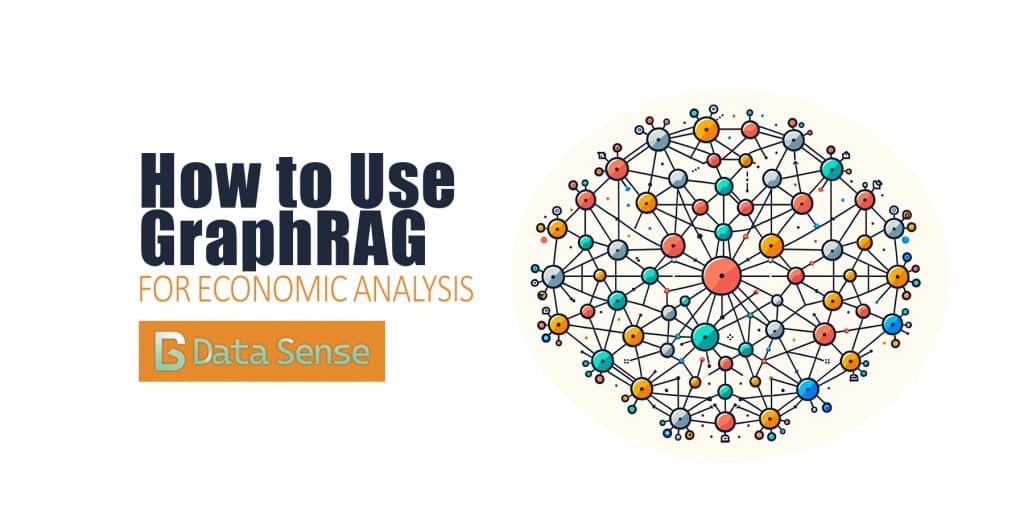
How knowledge graphs are transforming economic analysis by connecting quantitative data with institutional insights The Challenge Every Economic Analyst Knows Too Well Economic analysis today presents a fundamental challenge: the data we need exists in two separate worlds that rarely speak to each other. On one side, we have rich quantitative datasets like the World […]
The data landscape in 2025 is more dynamic and demanding than ever before. The data landscape in 2025 is more dynamic and demanding than ever before. Businesses are drowning in data but starving for insights. Manual data wrangling, complex setups, and the perpetual need for specialized data teams often trap great ideas and stifle agility. […]
