
OUR INSIGHTS
The Data Sense Blog
Exploring the world of data automation, analytics, and strategic insights for businesses and organizations.
-
 8 minutes
Why Governance is the Precondition for Scalable AI Agents
Read Featured Article ->: Why Governance is the Precondition for Scalable AI AgentsScalable AI agents are quickly moving from experimental tools to embedded components of enterprise infrastructure. In financial services, manufacturing, retail, and other regulated sectors, autonomous systems are beginning to interface directly with ledgers, operational databases, and reporting pipelines. As these systems evolve from conversational assistants into operational actors capable of invoking tools, modifying records, and…
MORE INSIGHTS
Explore Our Latest Articles
-
 10 minutes
AI Policy Engines: How to Operationalize AI Governance for Financial Institutions
Read More ->: AI Policy Engines: How to Operationalize AI Governance for Financial InstitutionsEvaluation can show whether an AI system is performing acceptably. It cannot, by itself, decide what should happen next. AI policy engines fill that gap by translating governance logic into repeatable runtime decisions across agents, applications, and workflows.
-
 12 minutes
How to Evaluate AI Agents: Building a Governance Framework
Read More ->: How to Evaluate AI Agents: Building a Governance FrameworkAI gateways control whether a model call is allowed to happen. Evaluation systems determine whether autonomous behavior remains acceptable after that access has been granted. In financial institutions, that means measuring performance continuously, defining thresholds explicitly, and inserting human review or restrictions before failure becomes systemic.
-
 10 minutes
AI Gateways: The Control Plane for Model Access
Read More ->: AI Gateways: The Control Plane for Model AccessIdentity, lineage, and semantics make AI systems interpretable. They do not, by themselves, control model access. AI gateways are the enforcement layer that determines whether a model call is allowed to happen at all, which model path is permitted, and what runtime constraints apply.
-
 10 minutes
Semantic Layers: The Hidden Infrastructure Behind Scalable AI
Read More ->: Semantic Layers: The Hidden Infrastructure Behind Scalable AILineage can show how a decision was made. It cannot guarantee that the data, features, rules, and policy terms behind that decision meant the same thing everywhere they were used. That is the role of the semantic layer: to make business definitions machine-readable, reusable, and governable so AI systems can…
-
 8 minutes
Data Lineage as the Trust Backbone of AI Governance
Read More ->: Data Lineage as the Trust Backbone of AI GovernanceMost financial institutions say they have data lineage. What they usually have is a reconstruction layer: metadata inferred from logs, scheduler state, warehouse queries, notebook history, catalog scans, and pipeline definitions. That is useful for debugging. It is not enough for governance. That distinction matters more as AI moves deeper…
-
 7 minutes
Identity for AI Systems: The Glue That Holds AI Governance Together
Read More ->: Identity for AI Systems: The Glue That Holds AI Governance TogetherAI systems are starting to behave less like tools and more like participants in an operating environment. They retrieve data, apply transformations, and trigger downstream actions with increasing autonomy. As discussed in the shift toward machine-operational metadata, these systems are no longer just interacting with documentation, they are interacting with…
-
 6 minutes
Metadata for AI Agents vs. Human Metadata
Read More ->: Metadata for AI Agents vs. Human MetadataIn our previous article, we argued that governance is the prerequisite for scalable AI systems. As organizations move from experimentation to deploying autonomous agents, governance can no longer rely on human oversight alone. Policies, controls, and access rules must be interpretable by machines. For this to work, AI systems require…
-
 5 minutes
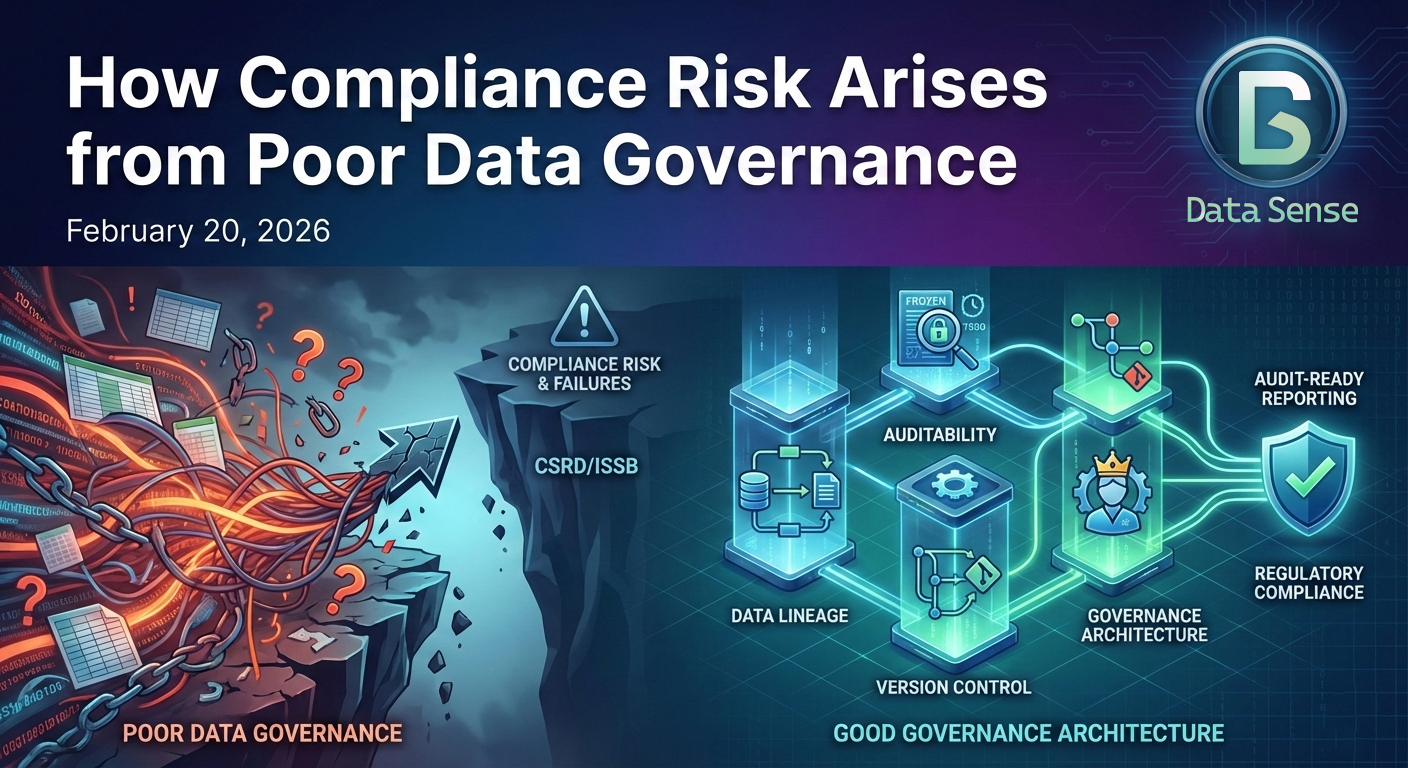
How Compliance Risk Arises from Poor Data Governance
Read More ->: How Compliance Risk Arises from Poor Data GovernanceMost compliance failures don’t begin with fraud. They begin with poor data governance and data management; inconsistently defined metrics, lack of ownership, scattered calculations and methodology. Under the Corporate Sustainability Reporting Directive (CSRD), climate and sustainability disclosures are subject to structured reporting standards issued by European Financial Reporting Advisory Group (EFRAG) and increasingly aligned…
-
 4 minutes
Automating a Risk Control Dashboard with Power BI MCP in Cursor for Free
Read More ->: Automating a Risk Control Dashboard with Power BI MCP in Cursor for FreeModern risk and control dashboards rarely fail because of visuals. They fail upstream, where definitions drift, calculations get re-implemented, and data governance lives in spreadsheets or people’s heads. In this walkthrough, I demonstrate how Power BI’s MCP (Model Context Protocol) can be used inside Cursor to automate much of that…
-
 4 minutes
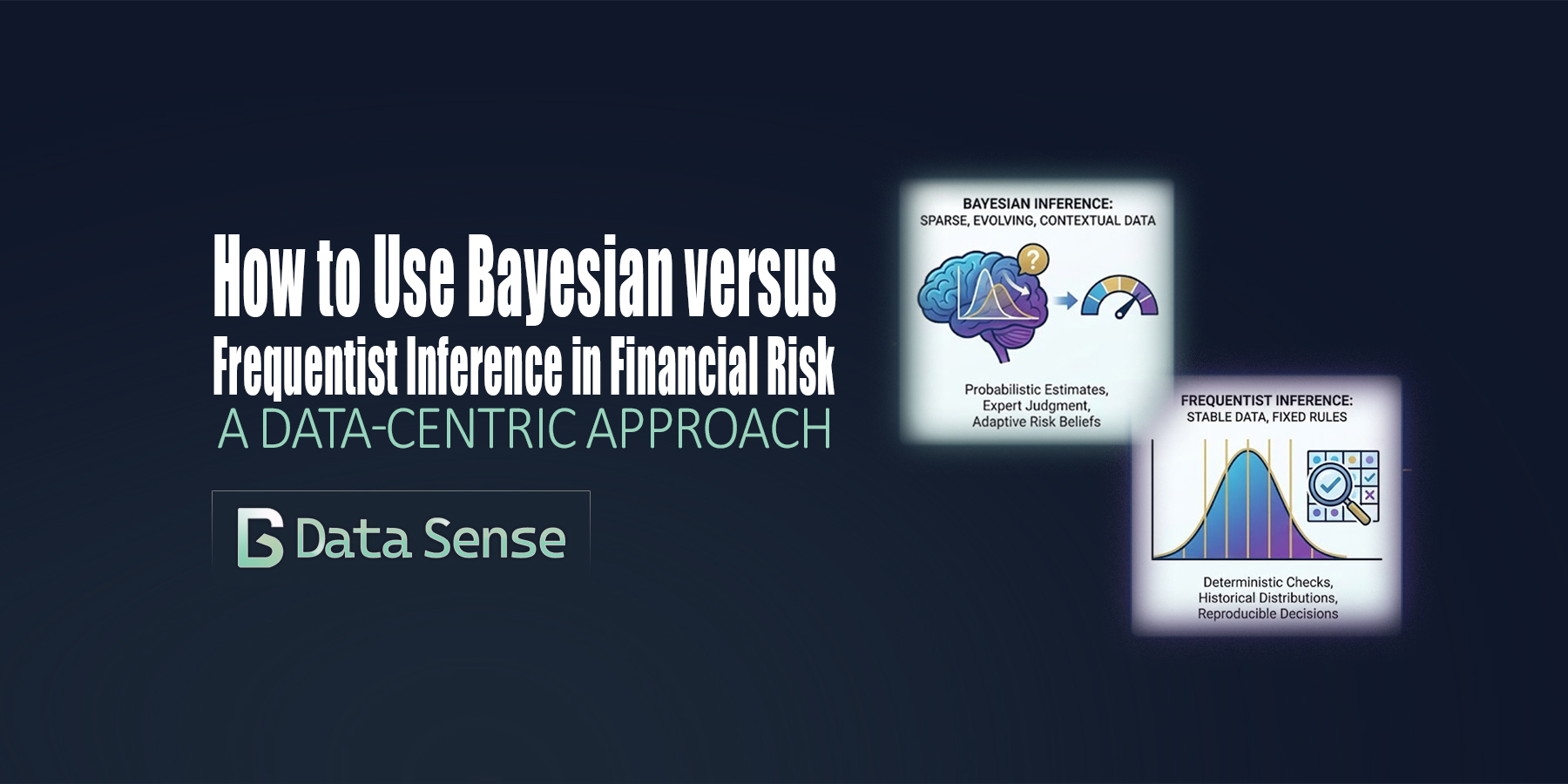
How To Use Bayesian versus Frequentist Inference
Read More ->: How To Use Bayesian versus Frequentist InferenceIn financial risk management, debates about Bayesian versus frequentist inference are often framed as methodological or philosophical. In practice, the choice is far more pragmatic: it is primarily a data problem. Model risk, drift, and operational risk live upstream of market, credit, and liquidity models. They are shaped less by…
What are you interested in?
©2025 Data Sense. All rights reserved.